
Change Without Authority
This week's newsletter was written by:
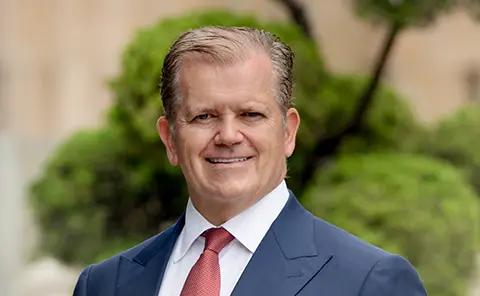
John Rizzo
Former Chief Customer & Strategy Officer, Bupa Asia Pacific
Founder, Joyous Work
Don't try and force people to choose strategic work - make strategic work impossible to ignore.
You're sitting in the office of the CEO. Seven PDF reports open, 379 pages of numbers, charts, and more traffic lights than peak hour.
The CEO turns to you, the Chief Strategy Officer, gestures towards the sea of displeasing colours and tepid gradients, and asks with frustration:
“None of this is working! We've given more money to data, more to product, more to integration - where the hell are the results?”
You look left. You look right. You have an intrusive thought: Perhaps I should respond, “Our plan is great! The problem is people are still doing too much off-strategy work, and you haven't given me the authority to tell all the departments what to do!”
No, let's hold onto that one. Not with all the department heads in the room. It's true though, you grumble to yourself as the CEO dives into the next set of charts.
You're in the business of delivering outcomes
Theodore Levitt helped popularise an important observation about why people buy drills: It's not because they want a drill. It's because they want a hole.
Your CEO doesn't want a strategic plan. They want the outcomes of that plan. The plan is simply a means to that end. As the CSO, you're in the business of delivering outcomes.
That's your promise, your opportunity, and your burden. You can choose how you want to hold it, but hold it you do.
And so we come to the uncomfortable reality of the CSO role: you're accountable for the organisation's strategy, but you have little explicit authority over the people who must do the work to realise it.
The most common reaction is an entirely human one: How am I supposed to deliver these outcomes when I can't tell people what to do?
Well, you have a choice. You could fight a battle of biblical proportions against the status quo, attempting to wrestle control from others who are hardly enthusiastic about surrendering their slice of the scarce resource known as authority. You might eventually win some of it, after years of political manoeuvring, restructures and increasingly elaborate governance arrangements.
Or you could accept your lack of explicit authority as a circumstance of the role and find another way to influence what people do.
I'll take option two every day of the week.
Progress is just a collection of choices
At its simplest, explicit authority gives someone the right to decide what others must do. As the CSO, you don't have this right over most of the organisation. But you do have an opportunity to influence the choices that individuals, teams and departments make.
And choices, after all, are how work gets done.
Every working day, people make hundreds of choices about where to direct their finite time and attention. Which meeting to attend (it will be most of them), which email to answer (it will be some of them), which document to actually read end-to-end (it will be few of them). Who to call, what to think deeply about for those seven uninterrupted minutes, which process to follow, and which to ignore.
Collectively, these choices determine what the organisation actually does. And what the organisation actually does determines whether its strategy becomes reality.
This brings us to the critical question: how much influence does strategy really have over the choices people make about their work each day?
I would argue that in most organisations, very little.
Not because people don't believe in the strategy. They might wholeheartedly agree with it, understand why it's important and genuinely want it to succeed. The problem is that strategy is competing for attention in an environment where almost everything else has a considerable advantage.
Consider how ordinary work presents itself. An email arrives and requires a response. A customer complains and needs a resolution. A Board report is due next week and must be completed. These demands are tangible - they have boundaries, a recognisable next step, and usually a person waiting for something to happen.
Each demand effectively presents a choice: Will you do this work, or won't you? And there are usually immediate consequences for choosing not to.
Now consider how strategy presents itself:
Our strategic priority is to increase share of wallet within the affluent customer segment.
Wonderful. But what exactly am I being asked to do on Tuesday morning? How much time should I allocate to it? What should I stop doing to make room? And how will anyone know whether I have made progress?
The strategy is clear enough as an ambition, but hopelessly abstract as a choice about work to do today. Worse still, unlike the unanswered email or the overdue Board report, failing to make progress on the strategy is unlikely to attract any immediate attention.
So people get on with the things in front of them. The emails, the meetings, the requests, the reports. These things are real, immediate and difficult to ignore. Meanwhile, work that advances strategy can wait until tomorrow, or next week, or when things settle down.
Nobody has consciously decided not to execute the strategy. Nobody has announced that it isn't important. Yet thousands of perfectly reasonable daily choices accumulate into an organisation that spends surprisingly little of its time progressing what it claims matters most.
And somewhere in the CEO's office, another traffic light turns amber.
The extraordinary power of making people choose
I want to take a brief detour into behavioural science, because there's a fascinating experiment that offers a clue to how we might solve this problem.
In 2019, researchers Martin Kesternich, Daniel Römer and Florens Flues published the results of a large experiment involving more than 10,000 decisions made by people purchasing long-distance bus tickets.
When purchasing their ticket, travellers were offered an opportunity to pay a small additional fee to offset the carbon emissions associated with their trip.
There are plenty of reasons a traveller might ignore that offer. They might not want to pay more, might question whether offsets do any good, or might consider the environmental consequences to be the transport provider's responsibility. Or perhaps they simply want to buy their ticket and get on with their day.
The researchers wanted to know whether they could influence the decision without changing the cost, providing new information or offering an incentive.
So they made one small change for the test group: travellers were required to make an explicit choice about whether they wanted to offset their emissions. They could still decline, but they couldn't proceed without answering.
The impact was huge: requiring an explicit choice increased participation in carbon offsetting by almost 50% relative to the other group.
That's a big difference when the underlying offer hadn't changed. There was no new information, no additional benefit and no financial incentive. The researchers had simply changed the conditions under which people made their decision.
The difference was that ignoring the offer was no longer an option. A traveller who didn't want to contribute now had to actively decline something associated with a socially desirable goal.
This is an example of a behavioural principle known as active choice. When no active choice was required, people could avoid the discomfort of declining a socially desirable action by avoiding making a decision altogether. By requiring a choice, the researchers removed some of that comfortable ambiguity.
I think active choice is one of the most underutilised tools available to the CSO.
Work that advances strategy is a bit like carbon offsetting: everyone understands why it's important, most people would say they support it, but when it's possible to carry on with the day without making an explicit decision about it, that's exactly what tends to happen.
This is the opportunity for the CSO who is starved of explicit authority: rather than trying to control the decisions people make, change the conditions under which they make them.
Make the work visible, then make the choice unavoidable
There's a prerequisite to making strategy an active choice, because people can't choose to do work that they can't see or understand.
So the first task is to make the work that advances strategy visible and granular. Not another layer of strategy documents, not a more detailed roadmap that attempts to predict every step required to achieve a result. We need to translate strategic intent into the specific work that matters next - in the next fortnight, or next month, and not much farther.
The next work for the strategic outcome of increasing share of wallet within the affluent customer segment might be interviewing 20 high-value customers to understand why they purchase certain services from competitors. It might involve testing a new proposition with a small group of existing customers, or training one customer team on a novel approach to relationship management. The most important work might simply be to gather and examine the sparks of ideas from across the organisation about how to pursue this outcome.
Each of these is a bounded piece of work. We can understand what it involves, why it matters, who needs to contribute and what progress would look like. We can decide whether it deserves attention now. And because strategy rarely unfolds exactly as planned, we can use what we learn from completing one piece of work to determine what should happen next.
Once strategic work exists in this tangible form, we can put it on the table. It's time to make an active choice.
Gather leaders from across the departments that might contribute to strategic execution. One room, with a figurative or literal table, and all of the potential strategic work laid out for everyone to see.
Then ask the question:
“Which of these pieces of strategic work are we choosing not to progress over the next two weeks?”
The framing is deliberate. We're not asking who supports the strategy, because everybody already does. We're not asking people to reaffirm their commitment to delivering it, because they've already done that too. And we're not asking for another progress report on an implementation plan.
We're asking people to make an explicit choice about the specific work that will advance the strategy.
Just like the carbon-offsetting experiment, the choice is no longer something people can quietly avoid. And we're adding another important ingredient that wasn't present in the offset experiment: the decision is being made in front of colleagues who share responsibility for the organisation's success.
This creates a powerful form of positive collegiate pressure.
It's one thing to spend your week working on something else while strategically important work sits untouched. It's quite another to sit with your colleagues, look at the work the organisation has agreed matters most, and explain why you are choosing not to progress any of it.
Importantly, this doesn't mean all work becomes strategic work. There is predictable operational work that must continue, and unpredictable emergent work that demands attention. It's essential that people can say no. Sometimes a piece of strategic work really should wait, particularly if progressing it means neglecting something more important.
But now those trade-offs are visible. If Product or Technology or Legal commits to no work to progress strategy for five cycles in a row, that is transparent. It can be discussed, challenged and resolved.
Either way, the choice has been made visible. And visible choices can be challenged in a way that silent inaction cannot.
But there is more power in this practice than making strategic work difficult to ignore.
Because we're choosing just a few weeks of tangible work at a time, we're also making real commitments to each other. Someone who has publicly committed to progressing a piece of strategic work knows that when the group next meets, they'll be asked what happened. Not whether their status report is green, but what they actually did, what they learned and what progress was made.
That creates a reason to protect time for the work, to seek help when obstacles are encountered, and to resist some of the less important demands that would otherwise consume the week. It's a recurring nudge towards strategic work that the abstract annual plan simply cannot match. The roadmap might tell us what we intended to do, but it doesn't create the same immediate, personal accountability for what we choose to do next.
And there's another consequence. People now have a compelling reason to make different choices about the work they don't do.
Once the organisation has translated its strategic priorities into tangible work that can be progressed tomorrow, it becomes harder to keep saying that there simply isn't time for it. The question naturally becomes, “If this work is important enough to progress, what are we going to stop, delay or do differently to make room?”
This is where the intervention moves beyond social pressure and starts to change the system of work itself.
People begin challenging existing work. They question time sinks that have long escaped scrutiny, look for ways to stop or simplify low-value activities, and start matching people to work based on their skills rather than the constraints of their jobs. Where capacity genuinely cannot be freed, the conflict becomes visible to the leaders who can resolve it.
Conversations that previously centred on whether people were sufficiently committed to the strategy begin to centre on how the organisation is choosing to spend its finite capacity.
The aim isn't to make saying no to strategic progress unacceptable. It's to make unexamined neglect of the strategy impossible.
What matters is that the organisation stops treating strategic work as something to be squeezed in around everything else, and starts making deliberate choices about how much of its capacity will be invested in progressing it.
Repeat this process frequently, with a current view of the work that matters next, and something powerful begins to emerge. Strategy stops being a periodic exercise in planning, communicating and reporting. It becomes an active influence on the choices that determine what individuals, teams and departments actually do, week after week.
The realistic starting point
Start with one outcome. It's that simple.
Choose one strategic outcome that matters, and identify one person who will be responsible for translating it into the work to do next. Arm them with a strong outcome brief: articulate the directives (what must happen), guidance (suggestions, ideas and hypotheses), success signals (how we'll recognise progress), and a decision map (how decisions will be made).
That person can consult subject matter experts, explore options and gather ideas from across the organisation. Their task isn't to produce an elaborate implementation plan for the year ahead. It's to identify the tangible work most likely to advance the outcome over the next few weeks.
Put that work on the table. Gather leaders from the departments that might contribute to its execution - you might already have a recurring meeting you can use - and ask the question:
“Which of these pieces of strategic work are we choosing not to progress over the next month?”
Then make the choices explicit. What are we picking-up and committing to, who will contribute, and what might need to stop or wait to make room?
If the group chooses to progress all of it, wonderful. If the group chooses to progress almost none of it, that's useful too. At least the gap between strategic ambition and the organisation's choices is now out in the open.
Come back next month. Review what was done, what was learned, and what matters next. Then put the next set of work on the table and make the choice again.
And keep repeating.
The power comes from making the active choice, not from getting the answer you want on the first attempt. A choice to make meagre progress is not a reason to abandon the practice. Keep making the choice visible, keep creating opportunities to challenge it, and keep returning to what the organisation said mattered most.
Over time, the conversation changes. What began as a slightly uncomfortable choice becomes a normal part of how the organisation decides what work to do.
Once it's working for one strategic outcome, add the next, and the next. Let it grow because people become accustomed to the clarity, the autonomy to make meaningful choices, and the satisfaction of seeing real progress.
Control without authority
With this change, consider what you've accomplished as the Chief Strategy Officer.
The CEO has given you zero additional explicit authority. You haven't changed reporting lines, taken control of department budgets or demanded a bigger team. Instead, you've changed something much closer to the source of organisational performance: the choices people make about their work.
You've made strategically important work tangible enough to be chosen, visible enough to be difficult to ignore, and socially consequential enough that people are motivated to follow through. You've introduced a regular opportunity for the organisation to reconcile what it says matters most with what it is actually doing.
And you haven't needed to tell anyone what to do.
I’ve worked in organisations where this simple approach has changed more than half of what is being worked on. In one example, the strategic work on the table was almost never calling on the subject matter expertise of Risk and Marketing. But as these departmental leaders looked at the most important work, Risk said, We have amazing analytical minds who can help design that process, and Marketing said, We have people who are amazing at system integration who could do that. The most important work found the right people, job boundaries dissipated, and more people were able to use their skills to do the most important work: productivity for the organisation, and better work for its people.
And all of this happened not because someone in authority handed down a new set of demands, but because the organisation began making active choices it had previously been avoiding.
This, I think, is an extraordinary opportunity for the contemporary CSO. We tend to imagine that the ability to create change depends on having the authority to direct it. When we don't have that authority, our instinct is to compensate with persuasion: more compelling arguments, better presentations, stronger business cases and another round of stakeholder engagement.
But persuasion isn't our only option. We can change what people see, the choices they're required to confront and the conversations they have with one another. We can create the conditions in which people begin making different decisions for themselves.
That's a form of influence that doesn't need to be granted by the CEO, and it doesn't require anybody else to surrender their authority.
The alternative is another year of everyone diligently executing the tangible things that happen to demand their attention, followed by more tomes of reporting explaining why the outcomes we wanted remain stubbornly out of reach.
And another uncomfortable conversation in the CEO's office.
There is a better way. Don't try and force people to choose strategic work - make strategic work impossible to ignore.


Comments